

Trail Forum Honors Dedicated Supporters
May 6, 2026
Meet Atticus, Our 2026-2027 Levine Scholar
June 23, 2026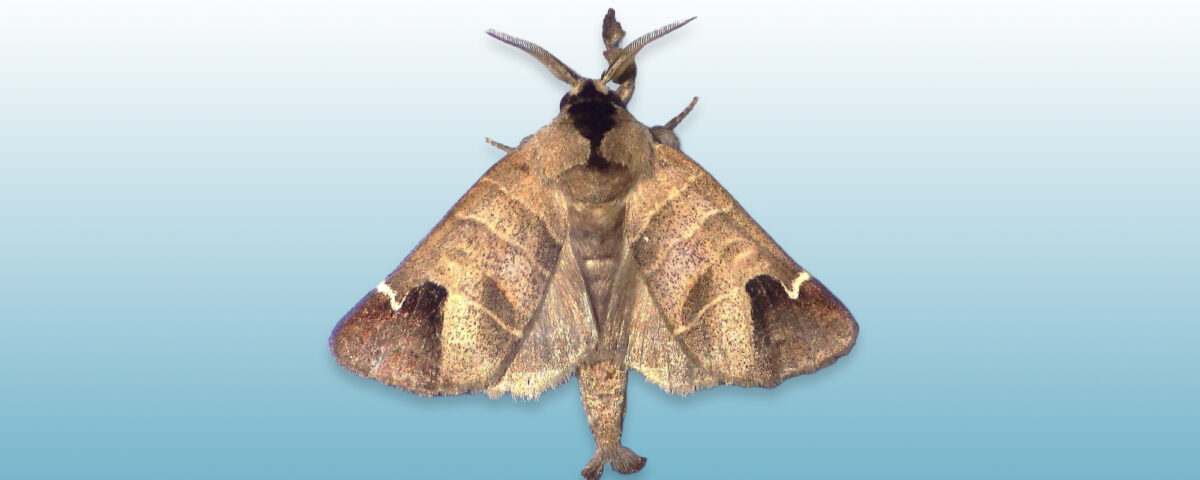
At our recent Moth Night, part of the Jenner Wood V Citizen Science Program, participants gathered at sundown along the Eastover Ridge Preserve greenway trail in Charlotte, ready to explore the nocturnal world that comes alive after dark. What none of our group expected was that the evening would lead to a truly remarkable biodiversity discovery documented on Conservancy land.
The event was led by Lenny Lampel, Natural Resources Supervisor at Mecklenburg County Park and Recreation, in coordination with Catawba Lands Conservancy.
As attendees made their way into the woods, cameras and flashlights in hand, naturalist and photographer Ken Kneidel captured an image that stunned biologists across the state. In a brief moment—just a few seconds, according to Ken—a moth landed near the group, long enough for a single photograph before disappearing back into the night.
That fleeting visitor turned out to be Clostera albosigma, commonly known as the sigmoid prominent. Prior to this sighting, the species had been recorded only once in North Carolina, in Ashe County. According to experts with the NC Biodiversity Project, the sigmoid prominent is not known to be highly migratory. That makes its appearance in Charlotte especially significant and suggests the possibility of a small, previously undetected population living within the preserve’s floodplain habitat.
Ken described the moment simply, “It landed, I took the photo, it flew away and didn’t come back.”
When Ken shared the image with biologist Steve Hall and other moth specialists, the response was immediate. They were “flabbergasted” by the find, both because of the species’ rarity and because its known range did not include the Charlotte region.
The moth’s association with cottonwood and willow trees, both present at Eastover Ridge Preserve, may help explain its presence. Still, the discovery raises exciting ecological questions about how species persist in small pockets of habitat, especially in urban areas where natural spaces are increasingly fragmented.
This observation is more than just a scientific curiosity. It highlights the critical importance of protected natural areas, even within a rapidly growing city. Urban preserves like Eastover Ridge provide refuge for species that might otherwise go unnoticed, and citizen scientists can help uncover these hidden stories.
Moments like this remind us that conservation is not only about protecting land—it’s about deepening our understanding of the living communities that depend on it. Thanks to engaged volunteers, curious observers and the power of shared discovery, our region’s biodiversity becomes a little more visible each time we step outside with open eyes.
If you’d like to explore more and get involved in our Jenner Wood V Citizen Science Program, visit https://catawbalands.org/citizen-science-at-clc/
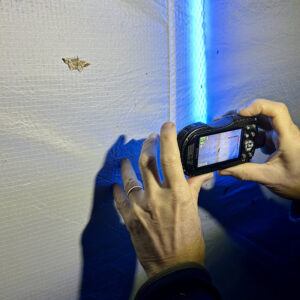
Photo credit: Ken Kneidel