

Check out our Spring 2026 Newsletter and Annual Report
May 5, 2026
Saving Land and History: The Last Known Slave Dwelling in Mecklenburg
May 6, 2026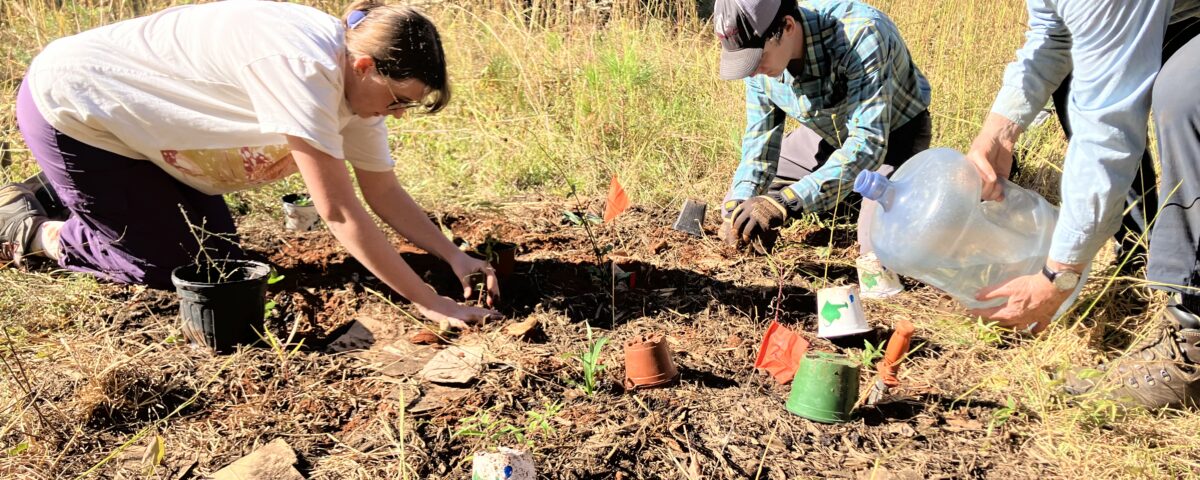
Land trusts offer an ambitious promise: conservation forever.
That promise begins with acquiring land or conservation easements to permanently protect important places. But it doesn’t end there. Stewardship—the ongoing work of defending, managing, and caring for protected land—ensures those conservation commitments endure long after the documents are signed.
With a time horizon measured in centuries, Catawba Lands Conservancy’s thirty-plus years represent only the beginning of that responsibility. As development pressure, legal complexity, and environmental change increase, one truth remains. Acquisition protects land today; stewardship protects it forever.
Managing Risk and Relationships
Recently, our friends at a peer land trust in NC found themselves in a legal battle with the new owners of a conserved property. During routine monitoring visits, stewardship staff documented major alterations to the land, including extensive clear-cutting and unauthorized road construction. Despite good-faith efforts to resolve the issues, the situation escalated until Triangle staff had little choice. Their legal duty to uphold the easement required them to file suit.
The outcome of the case remains uncertain, but legal fees are only part of the cost of defending conservation. The greater, often invisible cost lies in the extensive staff time required for site visits, documentation, research, correspondence, and negotiation. That work falls largely to stewardship teams.
Across the land trust community, conservation challenges are increasing. Terrafirma, the national insurance program used by most land trusts, reports that conservation-related legal cases have increased 105 percent over the last decade, while tax controversy cases have risen 114 percent in just the past three years.
Unauthorized clearing and construction are the most common violations, mirroring those in the Triangle case. Each claim can cost tens of thousands of dollars, and financial risk is only part of the concern. Poorly defended easements by any land trust can weaken the legal strength of every easement that other land trusts hold.
Most conservation challenges are first discovered during annual monitoring visits, when stewardship staff walk properties, meet with landowners, and document changes on the land. The work requires a rare blend of skills, including ecological knowledge, legal interpretation, careful documentation, and the social awareness needed to navigate sensitive conversations. In practical terms, stewardship is a risk-management system for conservation. In human terms, it is a relationship-building effort.
Relationships with landowners are often the most powerful protection a conservation easement can have. Good stewardship ensures those relationships are built early and maintained over time. At the Conservancy, three stewardship staff are responsible for 80 preserves, 144 conservation easements and more than 100 landowners. That means a lot of time in the field, crawling through brush, crossing fences and listening as landowners share knowledge about their farms and forests. Every property has a story, and every landowner has a reason they chose conservation. Acquisition is where those stories become partnerships; stewardship is where partnerships deepen and endure.
An Investment in Our Future
Stewardship isn’t just preventing violations. It is also about maintaining and improving the health of the land. As extreme weather and development pressure increase across the Southeast, land management practices such as invasive species control, prescribed fire, forest thinning, soil health practices and stream restoration help protected properties adapt and ensure that clean water, wildlife habitat and working farmland remain viable for generations.
Despite its importance, stewardship is often misunderstood. While acquisition projects often get the spotlight as conservation wins, stewardship happens quietly afterward, year after year.
Protecting land forever requires sustained attention, expertise and resources. It requires investment not only in new conservation projects, but also in the long-term care of the lands already protected. For donors and supporters, this presents an opportunity. While project-specific gifts are essential to acquiring new conservation lands, investments in stewardship ensure that every acre already protected remains protected for generations.
In short, stewardship is the fulfillment of the promise conservation makes to landowners, communities, and the future. And for those of us lucky enough to do the work, it might just be the coolest job in conservation.
Written by Sophie Harrington, Land Stewardship Manager